Now that we have taken off for our annual spring break, I can sit down, and write a bit about what I've been doing with the latest (or not-so-latest) hits on the French music charts. Some people prefer not to think about work over breaks, but I enjoy it because I'm not as rushed to get dinner on the table or run the kids to piano practice.
Just this week, Anne Wolfe Postic, a fantastic freelance writer and content developer from Columbia, South Carolina, posted a photo she took of the beautiful view from her Palmetto State beach house, and captioned it with a quick thought about working while on holiday:
"When people find out I always work on vacation, they often feel bad for me. But maybe they don't know "work" can mean making deviled eggs and pimiento cheese, pouring a glass of prosecco as a prop, then calling it dinner and eating it on the porch while watching a beach sunset. Sometimes work is exactly what you wanted to do anyway."
This really spoke to me because I'm one of those people who enjoys writing or working on projects when I'm in a more zen state of mind. As for a photo of southern culinary delights and a glass of bubbly, I'm not sure I could find a reason to include such a lovely scene in one of my posts on world language education, but....as the saying goes, where there's a will, there's a way. :D
Anyhow, I must add that Anne Wolfe Postic regularly contributes to publications such as The Kitchen, Southern Living online, Free Times, and many more. Check out her work at annewolfepostic.com. (Her hometown is one of many places I call home, so I am especially proud to share a bit about one of the city's best-known writers. Oh, and guess what. She's also a francophile, I believe. Don't quote me on that, but I'm almost sure she has an affinity for French culture and cuisine.)
Since food blogging is not what I'm doing with my career or this particular blog, I'll get back to the original reason for this post. Last weekend, I had the honor of presenting on music and intercultural communication at the joint spring conference of the North Carolina chapter of the American Association of Teachers of French (AATF) and Spanish (AATSP.) Heather Tedder (@HeatherAMTedder,) my wonderful French teacher colleague from a couple hours north-west of me, so kindly invited me to come share with her North Carolina friends. What a warm welcome I received there! Living and working somewhat on the border of the two Carolinas has its perks!
The theme for the conference was play, so music fits in quite well. There's so much joy when most people hear a good beat or a meaningful song lyric. Heather remembered a post I had written on music back in 2015, and decided to ask me to present on it. I just went back and read that post, which can be accessed directly here, and let me tell you, I now realize three things:
#1 I must go back to all of my old blog posts, and change all of those old, broken Wikispaces links to google ones. It's still shocking that Wikispaces shut down;
#2 I no longer look for music on Sundays to use on Mondays like I did back in 2015. I now have a husband and two kids, and our weekend time is most always sacred. On Fridays during my planning, if not before, I decide on a song for the following Monday. (Side note: I wrote this post on the weekend because it's my birthday, and I'm enjoying it my way. Hehe;)
#3 I am glad I blogged about music four years ago because I had forgotten that I began purposefully introducing music at that point. Also, it's fun to see how it has all evolved.
Before I post the link to the presentation, I just want to point out a few things about this work:
-This project is a work in progress. When I began looking closely at how I could use music as a springboard for intercultural communication, I gave one to three extra points or class euros on assessments if learners could recall the current song title and/or musician's name or answer questions about the topics that were pulled from the song. If you're against all forms of "extra credit," you could do what I'm about to explain to you in the next point. But first, I want to mention two things about extra points. First, I don't give too many extra points via Lundi en musique learning, so it doesn't change much. Second, I'm very much for standards-based learning yet I'm only permitted to administer retests on major assessments, and the highest grade one can earn is a 70%. I believe in second chances, therefore, my learners can "pay" with euros to retake both minor and major assessments with the possibility of earning a 100%. This is how I work with the demands of common assessments and retake policies that don't completely align with my philosophy.
-The next step in this project will be to make the intercultural learning -- both identification for novices and comparisons for intermediate learners -- an integral part of the unit. I still might offer an extra point or two for remembering songs and/or music groups, but my goal is to coach learners to use what they learned to demonstrate intercultural competence in every unit we explore.
-I am beyond pleased with the proficiency gains I've seen as a result of this project. My learners are using language better than before by applying expressions they've learned on Mondays. Example observation: Students are STILL expressing how they get from point A to point B in various contexts.
-Last but not least, I'd like to acknowledge some friends who have helped me with this project:
Leah Wilt - French Teacher at a high school in my county. Merci beaucoup, Leah, for creating many presentations of musicians/music groups. If anyone would like to have access to them, please DM me on Twitter or send me an email. Contact info is in the presentation.
Ruta Couet - retired SC Dept. of Education World Languages Associate (A.K.A. the AMAZING Ruta who was on the committee that wrote the 2017 ACTFL-NCSSFL Can-Do document) Merci beaucoup to Ruta for presenting on intercultural communication at SCOLT in Myrtle Beach a few weeks ago. It was helpful to hear her thorough explanation of what they created. In fact, I was only going to share about the novice and intermediate levels until I saw her presentation.
Heather Tedder - French Teacher at a high school in Boone, NC. Merci mille fois to Heather for inviting me to present at the NC conference. It gave me the push to really focus more on music and collect evidence of the benefits of the project.
My French learners - Without these wonderful young people, I wouldn't have explored French pop music or thought so deeply about how to address the Can-Dos of intercultural communication as much as I have lately. They bring smiles to my face with their dance moves, good cheer, and interest in the music.
It was such a pleasure to work on and share this project with others. Please let me know if you have any questions or comments about the project, presentation or resources I provided. There is a link to my Padlet and Google folder within the slide show.
Presentation: Jammin' on Mondays in the World Language Classroom
Happiest of Spring Breaks to you, and bonne continuation as we finish up the year!
The theme for the conference was play, so music fits in quite well. There's so much joy when most people hear a good beat or a meaningful song lyric. Heather remembered a post I had written on music back in 2015, and decided to ask me to present on it. I just went back and read that post, which can be accessed directly here, and let me tell you, I now realize three things:
#1 I must go back to all of my old blog posts, and change all of those old, broken Wikispaces links to google ones. It's still shocking that Wikispaces shut down;
#2 I no longer look for music on Sundays to use on Mondays like I did back in 2015. I now have a husband and two kids, and our weekend time is most always sacred. On Fridays during my planning, if not before, I decide on a song for the following Monday. (Side note: I wrote this post on the weekend because it's my birthday, and I'm enjoying it my way. Hehe;)
#3 I am glad I blogged about music four years ago because I had forgotten that I began purposefully introducing music at that point. Also, it's fun to see how it has all evolved.
Before I post the link to the presentation, I just want to point out a few things about this work:
-This project is a work in progress. When I began looking closely at how I could use music as a springboard for intercultural communication, I gave one to three extra points or class euros on assessments if learners could recall the current song title and/or musician's name or answer questions about the topics that were pulled from the song. If you're against all forms of "extra credit," you could do what I'm about to explain to you in the next point. But first, I want to mention two things about extra points. First, I don't give too many extra points via Lundi en musique learning, so it doesn't change much. Second, I'm very much for standards-based learning yet I'm only permitted to administer retests on major assessments, and the highest grade one can earn is a 70%. I believe in second chances, therefore, my learners can "pay" with euros to retake both minor and major assessments with the possibility of earning a 100%. This is how I work with the demands of common assessments and retake policies that don't completely align with my philosophy.
-The next step in this project will be to make the intercultural learning -- both identification for novices and comparisons for intermediate learners -- an integral part of the unit. I still might offer an extra point or two for remembering songs and/or music groups, but my goal is to coach learners to use what they learned to demonstrate intercultural competence in every unit we explore.
-I am beyond pleased with the proficiency gains I've seen as a result of this project. My learners are using language better than before by applying expressions they've learned on Mondays. Example observation: Students are STILL expressing how they get from point A to point B in various contexts.
-Last but not least, I'd like to acknowledge some friends who have helped me with this project:
Leah Wilt - French Teacher at a high school in my county. Merci beaucoup, Leah, for creating many presentations of musicians/music groups. If anyone would like to have access to them, please DM me on Twitter or send me an email. Contact info is in the presentation.
Ruta Couet - retired SC Dept. of Education World Languages Associate (A.K.A. the AMAZING Ruta who was on the committee that wrote the 2017 ACTFL-NCSSFL Can-Do document) Merci beaucoup to Ruta for presenting on intercultural communication at SCOLT in Myrtle Beach a few weeks ago. It was helpful to hear her thorough explanation of what they created. In fact, I was only going to share about the novice and intermediate levels until I saw her presentation.
Heather Tedder - French Teacher at a high school in Boone, NC. Merci mille fois to Heather for inviting me to present at the NC conference. It gave me the push to really focus more on music and collect evidence of the benefits of the project.
My French learners - Without these wonderful young people, I wouldn't have explored French pop music or thought so deeply about how to address the Can-Dos of intercultural communication as much as I have lately. They bring smiles to my face with their dance moves, good cheer, and interest in the music.
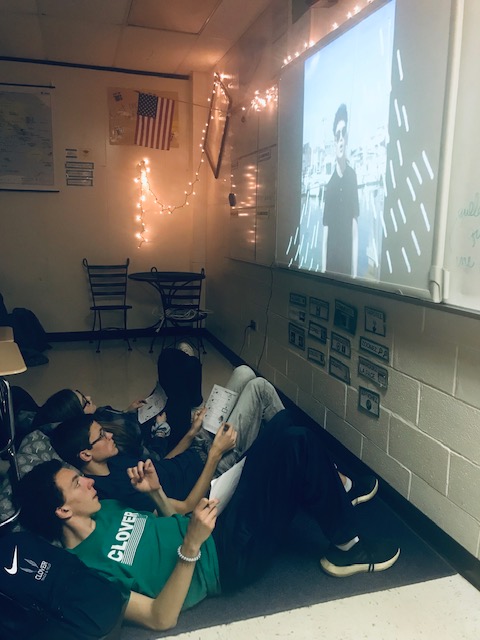
Filling out the bracket for French March Music Madness fun, thanks to @mmecarbonneau)
Presentation: Jammin' on Mondays in the World Language Classroom
Happiest of Spring Breaks to you, and bonne continuation as we finish up the year!


